A JCI accredited private hospital in Dubai's healthcare free zone, with approximately 91 beds, six operating theatres and 44 consultation rooms.
| Detail | Value |
|---|---|
| Reference | MG-08 |
| Asking price | AED 650,000,000 (approx. USD 177 million) |
| Accreditation | JCI accredited |
| Beds | Approximately 91 |
| Operating theatres | 6 |
| Consultation rooms | 44 |
| Price per bed | AED 7,142,857 |
| Price per operating theatre | AED 108,333,333 |
| Established | 2019 |
| Licensed scope | Medical and surgical specialties |
| Operational status | Operational, turnkey |
| Location | Dubai Healthcare City Phase 2, Al Jaddaf, Dubai |
| Transaction | Business, licence and asset transfer |
| Documentation | Released under NDA |
A JCI accredited private hospital in Dubai Healthcare City Phase 2, Al Jaddaf, is available for acquisition at AED 650,000,000, approximately USD 177 million. The facility has been operational since 2019 and holds approximately 91 beds, six operating theatres and 44 consultation rooms across medical and surgical specialties. It transfers as a turnkey business with immediate operational capability.
Approximately 91 beds, inpatient capacity.
Six operating theatres, surgical throughput.
Forty-four consultation rooms, outpatient capacity.
JCI accreditation, the Gold Seal of Approval.
The hospital holds JCI accreditation, awarded by Joint Commission International following an on site survey against its hospital standards. It is the most widely recognised international accreditation in healthcare and it carries the Gold Seal of Approval.
What matters commercially is that accreditation is not a certificate on a wall. For most organisations it runs on a three year cycle, with triennial surveys required to maintain it. Between surveys JCI monitors compliance on an ongoing basis through document review, data reporting and interviews, and it reserves the right to conduct an unannounced on site evaluation.
A buyer therefore inherits an operating discipline rather than a badge. Clinical governance, patient safety systems, documented quality measurement and the staff behaviours behind them are all in place and being audited. That is worth a great deal, because building it takes years and cannot be bought.
It also creates an obligation. Accreditation is maintained by continued compliance, so a change of ownership that disrupts clinical leadership or quality systems puts it at risk. Protecting it through transition is one of the first things we address in operational continuity planning.
Almost everything that trades in this market is a clinic: a licensed unit with consultation rooms and a specialty list. This is a different class of asset entirely.
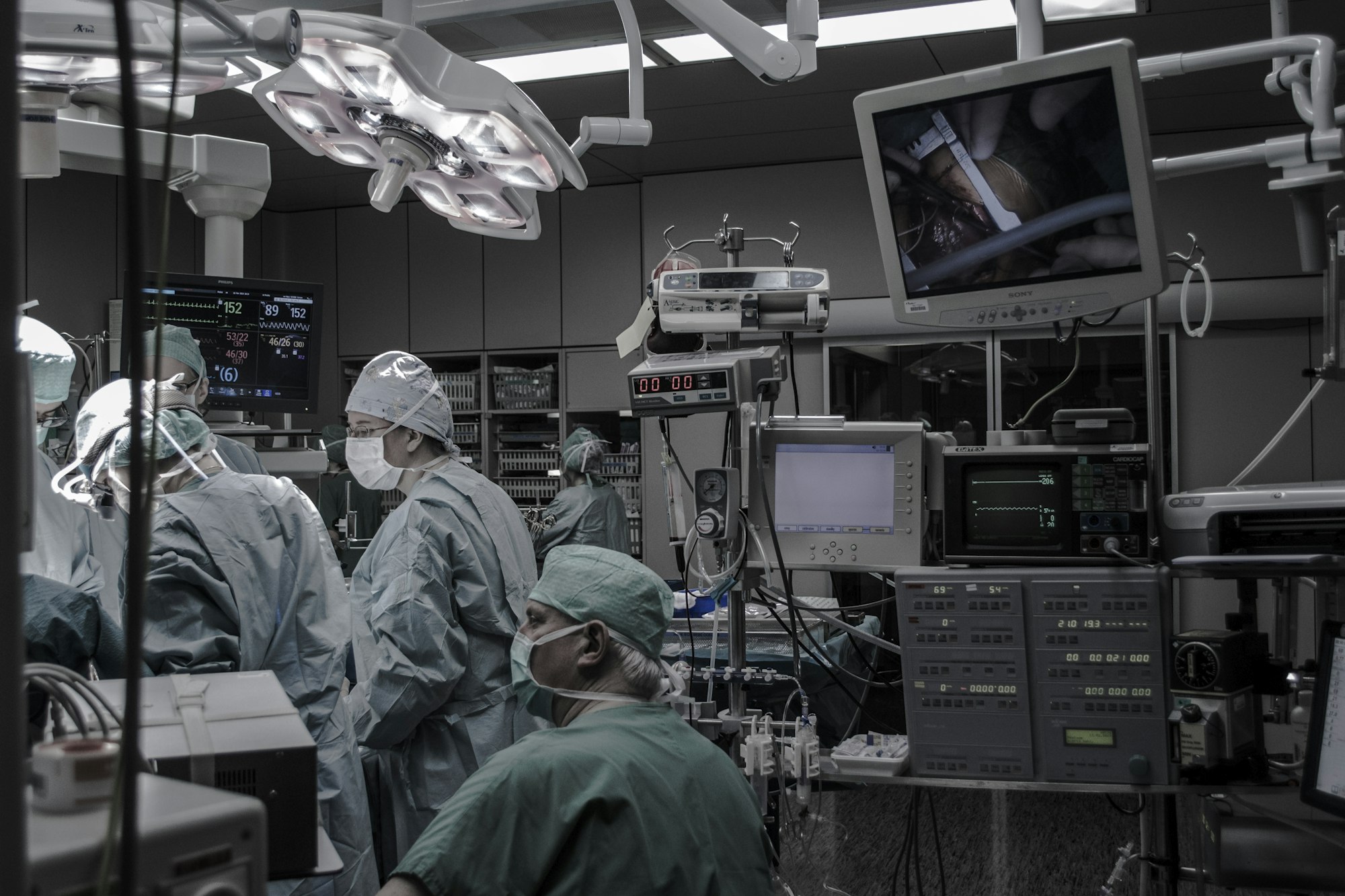
Six operating theatres with approximately 91 beds means inpatient capability, surgical throughput and the anaesthetic, recovery and sterilisation infrastructure behind both. Forty four consultation rooms means an outpatient operation feeding that surgical capacity rather than running separately from it. Those two things working together is what distinguishes a hospital from a large clinic.
It is also scope that cannot be assembled by adding specialties to a smaller licence. Hospital licensing is granted at facility level against hospital standards, and assets at this scale reach the open market rarely.
For context on how licensed scope drives value across smaller facilities, see our guide to what a healthcare facility is worth in Dubai.
Dubai Healthcare City is the emirate's dedicated healthcare free zone and its most recognised medical address. Facilities inside the zone operate under its own healthcare regulatory framework rather than mainland licensing, and the cluster is built around specialist care, international patients and medical tourism.
For a hospital that translates into three things a standalone site has to build from nothing. Referral density, because a concentration of specialist facilities generates cross referral. Patient expectation, because people who come to Dubai Healthcare City are choosing specialist care rather than convenience. And standing with insurers and international partners, which follows both the address and the accreditation.
A licence inside the zone is not interchangeable with a mainland one. It is a distinct regulatory position and it transfers with the business. Licensing and compliance across both frameworks is work we do daily.
The hospital is operational. A buyer takes over a running business rather than funding a build, and on a facility of this scale the difference is not incremental.
Building a comparable hospital means land or premises, construction, design approval, an inspection cycle, licensing, recruitment of a full clinical establishment, and then an accreditation process that JCI will not begin until the organisation can demonstrate consistent inpatient and outpatient activity over a sustained period. Every stage carries cost with no revenue against it.
Here that entire sequence is behind the buyer on the day the transfer completes.
A hospital of this size rarely runs at full licensed capacity across every approved specialty, and the seller's own position is that there is room for optimisation and specialty scaling.
Each underused approval is scope that has already been granted, inspected and paid for, and activating one is faster and cheaper than winning additional volume in the lines already running. The same applies to theatre utilisation, bed occupancy and case mix, which are the levers an incoming operator pulls first because none of them needs regulatory permission.
Finding the capacity a facility is already licensed for but not yet using is the core of our growth advisory work.
Buyers acquiring a UAE business at this level frequently ask about long term residency. Dubai's General Directorate of Residency and Foreigners Affairs lists an investor or partner in a UAE company, with an investment or share in company assets of at least AED 2 million, among the routes to Golden Residency. Supporting evidence typically includes a valid trade licence, a certified financial report, company bank statements and tax documentation. Golden Residency is issued for five or ten years depending on the qualifying category, is renewable, does not require a sponsor, and allows the holder to sponsor a spouse and children. We work with investors and family offices on structuring acquisitions with this in mind.
Residency routes and thresholds are set by federal and emirate authorities and can change. Eligibility depends on the individual applicant and the transaction structure, and should be confirmed with qualified immigration counsel before an offer is made. Nothing on this page is immigration, legal or tax advice.
| Category | Specialties |
|---|
Full schedules are released to qualified buyers under NDA. We support acquirers through transition, accreditation continuity and the first operating year with operational oversight.
Contact us quoting Ref. MG-08, with an outline of your background and funding position.
Name, exact address, licence file, accreditation status and financials released.
Licence, accreditation documentation, asset register, tenure documentation, staffing schedule and audited financial statements.
Arranged discreetly with the seller's representatives.
Licence, company, premises and accreditation continuity coordinated end to end.
Yes. The facility has been operational since 2019 and transfers as a turnkey business with immediate operational capability, rather than as a restart.
JCI accreditation is awarded by Joint Commission International following an on site survey against its hospital standards, and carries the Gold Seal of Approval. For most organisations it runs on a three year cycle, with triennial surveys required to maintain it and ongoing monitoring between surveys. A buyer inherits the clinical governance, patient safety systems and quality measurement behind it, and takes on the obligation to maintain them.
Accreditation is held by the organisation and is maintained by continued compliance rather than transferred like a licence. A change of ownership that disrupts clinical leadership or quality systems puts it at risk, which is why accreditation continuity is addressed from the outset of any transaction at this level. Current status and the next survey date are covered in the information pack.
Approximately 91 beds, six operating theatres and 44 consultation rooms, across medical and surgical specialties.
In Dubai Healthcare City Phase 2, Al Jaddaf, Dubai. The exact address is released after an NDA is signed.
Dubai Healthcare City is the emirate's dedicated healthcare free zone and its most recognised medical address. Facilities there operate under the zone's own regulatory framework rather than mainland licensing, and the cluster is built around specialist care and international patients, which brings referral density and standing with insurers that a standalone site has to build from nothing.
Tenure is confirmed in the information pack, including any annual rent, remaining term and transfer conditions.
A hospital of this size rarely runs at full licensed capacity across every approved specialty. Each underused approval is scope already granted, inspected and paid for, and activating one is faster than winning additional volume in the lines already running. Theatre utilisation, bed occupancy and case mix are the same kind of lever and none requires regulatory permission.
Foreign ownership of healthcare businesses is permitted in Dubai, including 100 percent ownership in most structures. The ownership structure should be confirmed against the regulatory framework that applies to the facility before an offer is made.
Offers are considered. Qualified buyers are invited to submit terms after reviewing the information pack, which includes audited financial statements.
Name, address, licence file and financials are released on signature of an NDA.